Written by Roger Sherratt
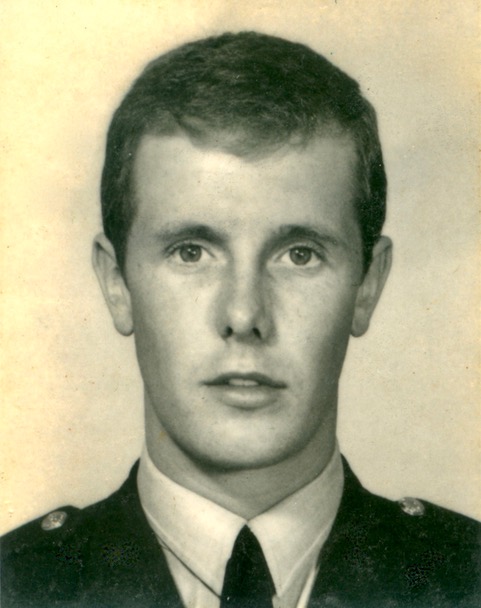 Young P.C. Roger Sherratt - 1964
One of my earliest memories of Bermuda is a visit to Admiralty House the day after I arrived in May 1964. Two other recruits and I were driven there in a Kombi and told to make ourselves at home at the dock overlooking Clarence Cove. Several off duty policemen were messing about in sail boats while a group of bikini clad nurses from King Edward Hospital were sunbathing along the dock, and above it all stood an imposing figurehead of King Neptune armed with a trident. Beneath him were the words “HMS Irresistible”.
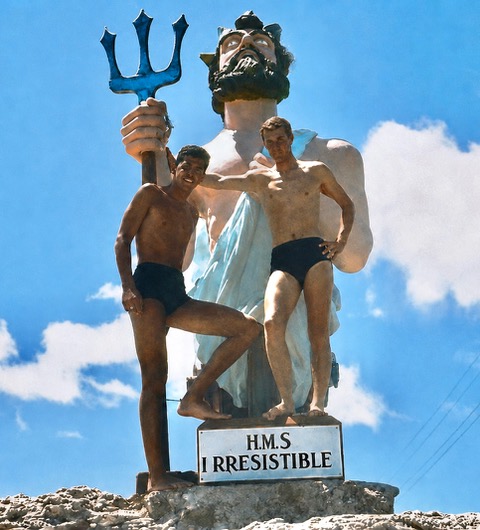
For a young man from the English Midlands whose idea of a beach holiday was a day trip to Blackpool, it seemed like paradise. I also remember sitting on the dock for hours on that first rather overcast morning, and paying the price later that evening with a case of the worst sunburn of my life. Our supposed remedy for next time was Johnson’s baby oil with a touch of iodine! For several years during the late 1950’s and early 1960’s Admiralty House and several if its buildings had been used as police singlemen’s quarters. I’ve written more about those days in another article “Admiralty House – 1960s Paradise!” here on our website. CLICK HERE to view it.
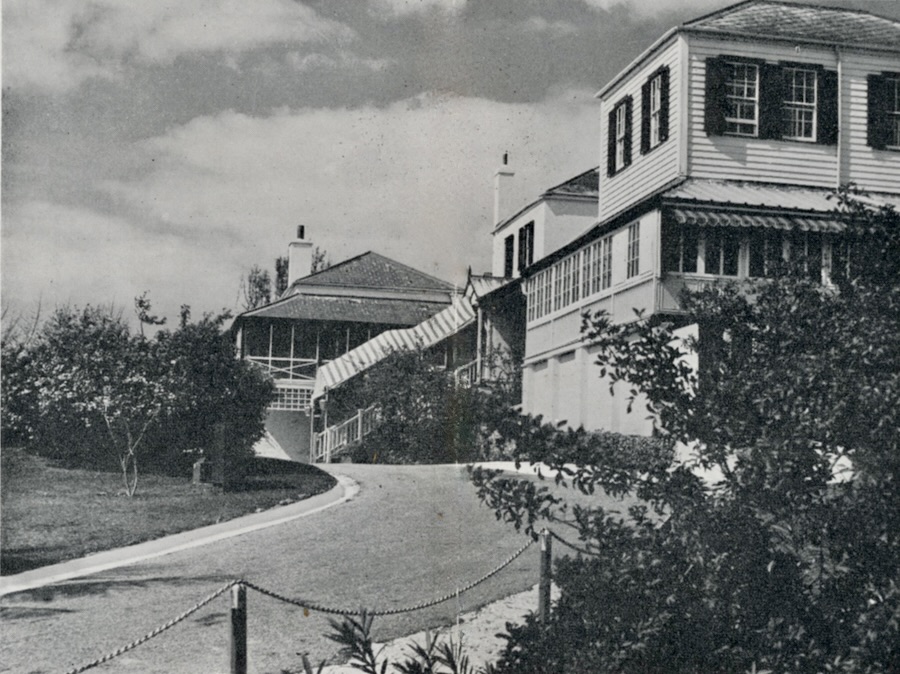
At the time, I gave little thought to where the figurehead of King Neptune had originated. Years later, I learned that his story began long before he became the King Neptune we knew in Bermuda.
HMS Irresistible a ship-of-the-line was launched at Chatham in 1859. Her figurehead originally represented Zeus, holding a thunderbolt rather than a trident. As I understand it, the ship sailed to and from Bermuda between 1868 and 1891. She was then permanently moored here and served for about 30 years as a floating storehouse and living quarters. She was eventually sold to Pearman Watlington & Co. for breaking up; her remains sank south of Marshall’s Island.
After the ship was broken up, her figurehead was brought to the Admiralty House dock overlooking Clarence Cove. where he faced decades of Bermuda weather on our exposed north shore, which would have taken its toll. Repairs during that time included a new right arm, extended forward to hold a trident. Zeus had been transformed into Neptune.
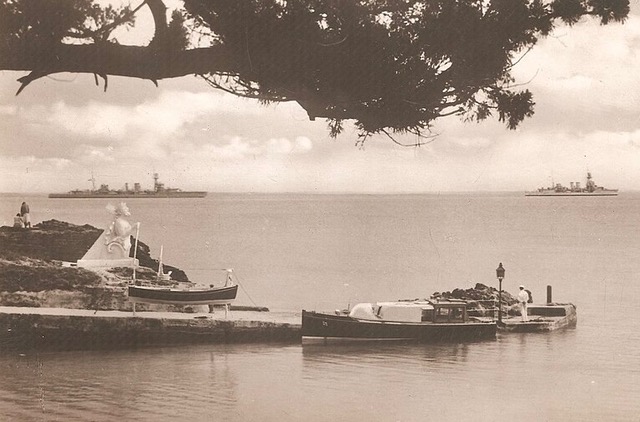
For the next 80 years King Neptune, complete with crown, watched over the cove. In 1974, a helicopter carried the original figurehead to the new Maritime Museum at the Royal Naval Dockyard. I recall hearing that he would travel to England for restoration and then return to Bermuda. He never did.
Bermuda did, however, receive another Neptune. In 1993, sculptor Laurence Tindall created a far more permanent stone version of the figurehead from three blocks of limestone. It stands in the Keep Yard at the Royal Naval Dockyard, where it’s a popular attraction to visitors and for children who can clamber over it.
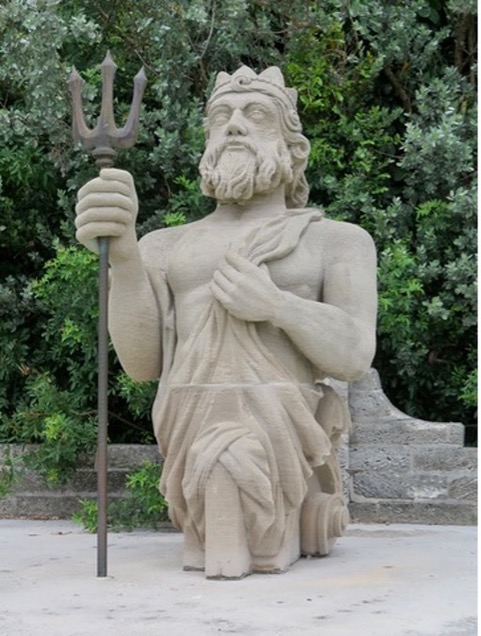
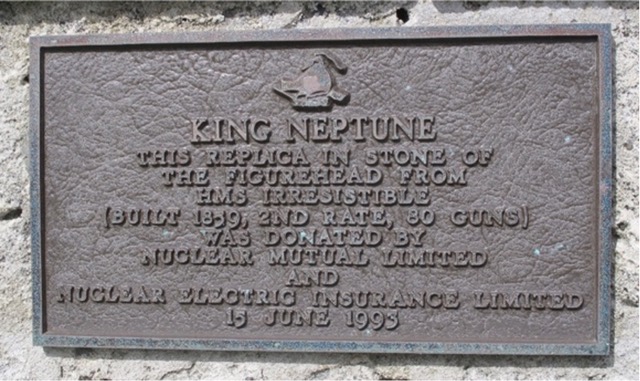
An excellent Royal Gazette article (CLICK HERE to view it) from 2007 with the headline “The Irresistible King Neptune” provides a detailed account of the history of King Neptune and HMS Irresistible, and credits Nuclear Electric Insurance Limited for generously sponsoring the sculpture. The inscription beneath it names both Nuclear Mutual Limited and Nuclear Electric Insurance Limited.
But what became of the battered wooden figurehead we remembered from Admiralty House?
He was taken back to Chatham, where HMS Irresistible had been built over 120 years ago. By the time he arrived in Chatham serious rot threatened the carving. Earlier attempts to save him had included an internal steel support and replacement sections, but much of the original timber remained in poor condition.
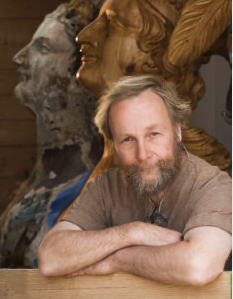
In 2024, master woodcarver, Andy Peters of Maritima Wood Carving took on the restoration. I was able to make direct contact with Andy who was happy to describe what he found and how he rebuilt the figurehead as follows:-
“I was approached to carry out a full restoration of the figure, which was transported to my workshop in 2024. The figure was dismantled, all the steelwork was removed along with any replacement timber, to leave just what remained of the original figure.
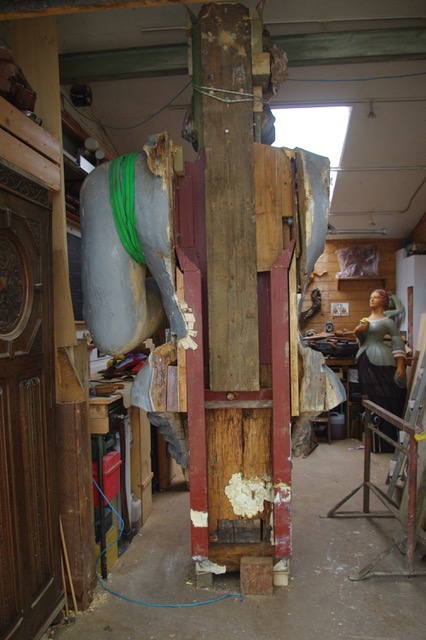
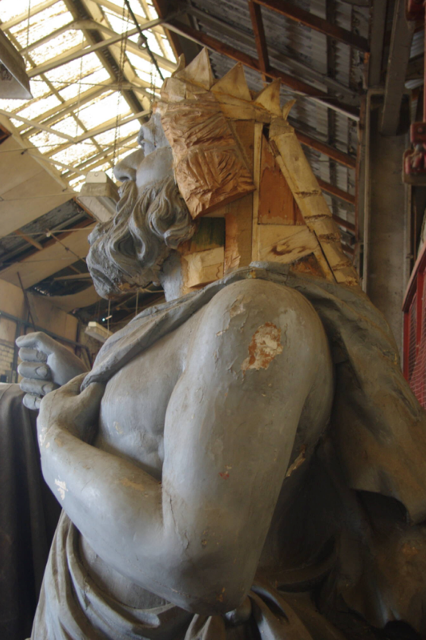
"Any remaining rot was removed, and surfaces machined flat to receive new timber. A new central core of timber was bonded in place, to which restored and re-carved sections were fixed. This included most of the back of the head, the crown, and drapery to the back of the figure. Working from old photographs I re-carved these missing parts.
"The figure was originally carved by Frederick Hellyer, who came from a famous family of ship carvers, who feature in my recently published book. I have over the years restored a number of Hellyer figureheads, which has helped me to re-create missing sections of carving with a reasonable degree of accuracy. In the course of researching the Hellyers, I came across Frederick's original drawing of the figure, which depicts him as Zeus, with his right arm stretching back holding a thunderbolt. At some point after the figure was removed from the ship, the right arm was replaced to its current position holding a trident.
"I would liked to have restored this back to the original position, but it was felt that he had been known as Neptune for so long now that he should remain as such.”
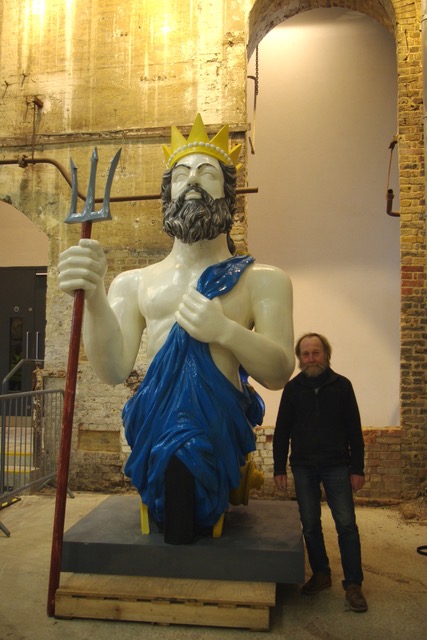
The restored figurehead returned to Chatham Museum in 2026 and is now on public display there. Andy’s photographs of the restoration can be seen on his website: www.maritimawoodcarving.co.uk under “Figurehead Restoration”.
It is remarkable to think that the weathered figure I saw overlooking Clarence Cove more than 60 years ago has survived, and has returned to its birthplace, while Bermuda still retains a direct link with H.M.S. Irresistible and our maritime history thanks to the sculpture of King Neptune displayed at the Keep Yard at the Royal Naval Dockyard.
Editors notes -
- Visitors to the iconic sailing ship Cutty Sark on the South Bank in London can view another fine example of master craftsman Andy Peters’ magnificent skills as a figurehead carver. Andy was commissioned to carve a new figurehead for the Cutty Sark on the occasion of her 150th anniverary year. CLICK HERE to view an article in the Royal Museums Greenwich website about the creation of the figurehead popularly known as “Nannie”. CLICK HERE to watch a You Tube video of the newly carved figurehead being fitted to the Cutty Sark.
- King Neptune has outlived the buildings at Admiralty House but Admiralty Cove is still a public park and continues to be a popular location for swimming and beach activities,